Industrial Sensors Explore Modern Applications and Smart Automation Trends
Industrial sensors are essential devices used to monitor, detect, and measure physical conditions in industrial environments. These conditions may include temperature, pressure, motion, proximity, humidity, and more. The primary purpose of industrial sensors is to collect accurate data that helps machines, systems, and operators make informed decisions.
In modern industries, sensors play a critical role in automation, safety, and efficiency. They enable real-time monitoring, reduce manual intervention, and improve operational accuracy across manufacturing, energy, logistics, and other sectors.
How Industrial Sensors Work
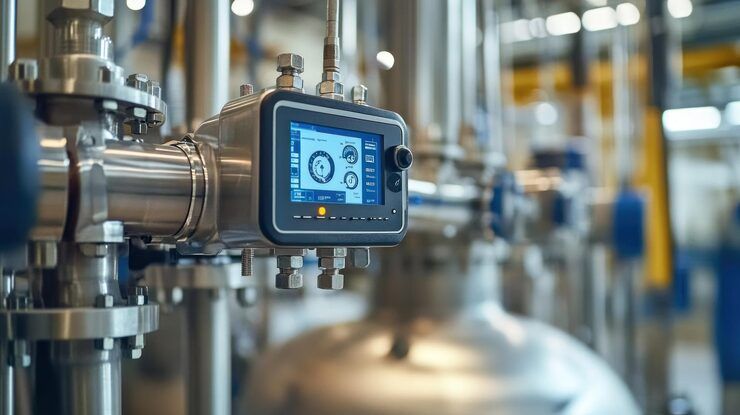
Industrial sensors operate by detecting changes in physical or environmental conditions and converting them into electrical signals. These signals are then processed by control systems such as PLCs (Programmable Logic Controllers) or industrial computers.
The working process generally includes:
- Detection of a physical parameter (e.g., heat, motion)
- Conversion into an electrical signal
- Signal processing and analysis
- Output to monitoring or control systems
For example, a temperature sensor detects heat variations and converts them into readable data that helps maintain optimal machine performance.
Importance of Industrial Sensors
Industrial sensors are fundamental to modern automation and smart manufacturing systems. Their importance can be seen in several areas:
- Improved accuracy in monitoring and measurement
- Enhanced safety by detecting hazardous conditions
- Increased efficiency through automation
- Reduced downtime with predictive maintenance
- Better quality control in production processes
Without sensors, industries would rely heavily on manual monitoring, which is less reliable and more time-consuming.
Real-World Use Cases
Industrial sensors are widely used across multiple sectors. Some key applications include:
- Manufacturing: Monitoring machinery performance and production lines
- Energy: Measuring pressure, flow, and temperature in power plants
- Oil and Gas: Detecting leaks and monitoring pipeline conditions
- Logistics: Tracking movement and storage conditions
- Agriculture: Monitoring soil moisture and environmental conditions
These applications highlight how sensors improve productivity and ensure consistent operations.
Types of Industrial Sensors
Key Types of Industrial Sensors
- Temperature Sensors: Measure heat levels in equipment and environments
- Pressure Sensors: Monitor pressure in systems such as pipelines and tanks
- Proximity Sensors: Detect the presence or absence of objects without contact
- Motion Sensors: Identify movement and changes in position
- Level Sensors: Measure the level of liquids or solids in containers
- Humidity Sensors: Monitor moisture levels in the air
- Flow Sensors: Measure the flow rate of liquids or gases
Each type serves a specific purpose and is selected based on industrial requirements.
Key Components of Industrial Sensors
Main Components
- Sensing Element: Detects the physical parameter
- Transducer: Converts the detected signal into electrical form
- Signal Processor: Processes and refines the signal
- Output Interface: Communicates data to control systems
- Housing: Protects the sensor from harsh environments
These components work together to ensure accurate and reliable measurements.
Key Features of Industrial Sensors
Important Features
- High accuracy and precision
- Durability in harsh environments
- Real-time data monitoring
- Compatibility with automation systems
- Low maintenance requirements
These features make industrial sensors suitable for demanding industrial applications.
Industrial Sensors Comparison Table
| Sensor Type | Function | Common Use Case | Key Advantage |
|---|---|---|---|
| Temperature | Measures heat | Manufacturing processes | High accuracy |
| Pressure | Measures pressure | Oil and gas systems | Reliable monitoring |
| Proximity | Detects objects | Assembly lines | Non-contact detection |
| Motion | Detects movement | Security systems | Fast response |
| Level | Measures liquid/solid | Storage tanks | Continuous monitoring |
| Flow | Measures fluid movement | Water treatment plants | Efficiency tracking |
Problems Industrial Sensors Solve
Industrial sensors address several operational challenges:
- Reduce human error in monitoring
- Prevent equipment failures through early detection
- Improve safety by identifying hazardous conditions
- Enable predictive maintenance
- Optimize resource usage
These solutions help industries maintain consistent performance and reduce risks.
Recent Trends and Developments
Industrial sensor technology has evolved significantly in the past year, driven by digital transformation and smart manufacturing.
Key Trends (2025–2026)
- Integration with IoT (Internet of Things) for real-time connectivity
- Wireless sensor networks for flexible deployment
- AI-based predictive maintenance systems
- Miniaturization for compact and efficient designs
- Edge computing for faster data processing
For example, in 2025, many industries adopted smart sensors integrated with AI systems to predict equipment failures before they occur, reducing downtime significantly.
Regulations and Standards
Industrial sensors must comply with various international standards to ensure safety and reliability.
Common Standards
- ISO (International Organization for Standardization) guidelines
- IEC (International Electrotechnical Commission) standards
- OSHA safety regulations (for workplace safety)
- RoHS compliance for environmental safety
These regulations ensure that sensors meet quality, safety, and environmental requirements.
Tools and Learning Resources
Useful Tools and Platforms
- PLC programming software for sensor integration
- SCADA systems for monitoring and control
- Industrial IoT platforms for data analytics
- Simulation tools for testing sensor performance
Learning Resources
- Online courses on industrial automation
- Technical documentation from manufacturers
- Engineering textbooks on sensor technology
- Industry webinars and training programs
These resources help professionals understand and implement sensor technologies effectively.
FAQs
What are industrial sensors used for?
Industrial sensors are used to monitor physical conditions such as temperature, pressure, and motion in industrial environments. They help improve efficiency, safety, and automation.
How do industrial sensors improve efficiency?
They provide real-time data that allows systems to operate automatically and accurately, reducing manual intervention and errors.
What is the difference between analog and digital sensors?
Analog sensors produce continuous signals, while digital sensors provide discrete outputs, making them easier to integrate with modern systems.
Are industrial sensors suitable for harsh environments?
Yes, most industrial sensors are designed to withstand extreme temperatures, pressure, and environmental conditions.
What industries rely most on industrial sensors?
Manufacturing, energy, oil and gas, logistics, and agriculture are among the industries that heavily rely on industrial sensors.
Conclusion
Industrial sensors are a cornerstone of modern industrial systems. They enable accurate monitoring, enhance safety, and support automation across various sectors. By converting physical conditions into actionable data, sensors help industries optimize performance and reduce operational risks.
With advancements such as IoT integration, AI-driven analytics, and wireless technologies, industrial sensors continue to evolve rapidly. As industries move toward smarter and more connected systems, the role of sensors will become even more critical in shaping efficient and sustainable operations.

Related Post...