Industrial Drone Solutions: Explanation of Technology and Trends
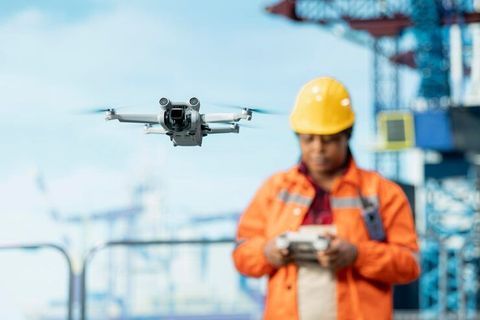
Industrial drone solutions refer to the use of unmanned aerial vehicles (UAVs) equipped with advanced sensors, software, and communication systems to perform tasks in industrial environments. These drones are designed to improve efficiency, safety, and accuracy in operations such as inspection, mapping, surveillance, and data collection.
Unlike consumer drones, industrial drones are purpose-built for complex environments like construction sites, oil refineries, agricultural fields, and power plants. They help reduce manual labor, minimize risks, and provide high-quality data for decision-making.
How Industrial Drone Solutions Work
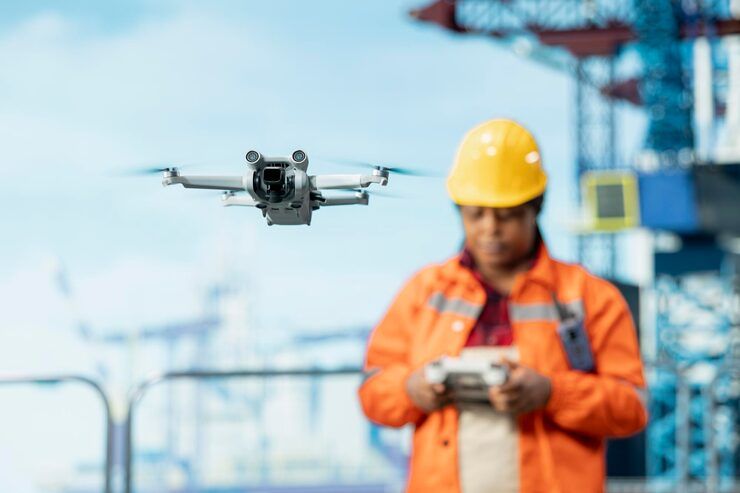
Industrial drones operate through a combination of hardware, software, and communication systems. They are typically controlled remotely or programmed for autonomous missions.
The process generally involves:
- Flight Planning: Operators define routes and tasks using specialized drone software
- Data Capture: Sensors and cameras collect images, videos, or environmental data
- Transmission: Data is transmitted in real time or stored onboard
- Processing: Software platforms analyze the collected data
- Reporting: Insights are generated for industrial applications
Advanced drones also use artificial intelligence, GPS navigation, and real-time analytics to perform automated inspections and monitoring.
Importance of Industrial Drone Solutions
Industrial drone solutions play a significant role in modern industries by improving productivity and reducing operational risks.
Key importance includes:
- Enhancing workplace safety by minimizing human exposure to hazardous environments
- Increasing efficiency in large-scale inspections and surveys
- Reducing operational downtime through faster data collection
- Improving accuracy with high-resolution imaging and analytics
- Supporting data-driven decision-making
These solutions are widely used in industries where traditional methods are time-consuming or risky.
Real-World Use Cases
Industrial drones are applied across various sectors to solve specific operational challenges.
Common Applications
-
Infrastructure Inspection
Drones inspect bridges, towers, pipelines, and power lines without requiring scaffolding or shutdowns -
Construction Monitoring
They track project progress, create 3D maps, and improve site management -
Agriculture and Precision Farming
Drones monitor crop health, irrigation patterns, and soil conditions -
Mining and Quarrying
Used for surveying, volumetric analysis, and safety inspections -
Oil and Gas Industry
Drones inspect offshore rigs, pipelines, and storage tanks -
Disaster Management
Provide real-time data during natural disasters for rescue planning
Key Features and Components
Industrial drone solutions consist of multiple integrated components that enable their advanced capabilities.
Core Components
-
Drone Platform
Includes fixed-wing, rotary-wing, or hybrid drones -
Sensors and Cameras
High-resolution cameras, thermal sensors, LiDAR, and multispectral imaging -
Navigation Systems
GPS, RTK (Real-Time Kinematic), and obstacle avoidance systems -
Communication Systems
Enable real-time data transmission and remote control -
Software Platforms
Used for flight planning, data analysis, and reporting -
Battery and Power Systems
Provide extended flight time and energy efficiency
Types of Industrial Drones
Different types of drones are used depending on the industrial requirement.
Major Types
-
Fixed-Wing Drones
Suitable for long-distance surveys and large-area mapping -
Multirotor Drones
Ideal for detailed inspections and short-range operations -
Hybrid Drones
Combine vertical takeoff with long-range capabilities -
Autonomous Drones
Operate with minimal human intervention using AI and automation
Industrial Drone Solutions vs Traditional Methods
| Feature | Industrial Drone Solutions | Traditional Methods |
|---|---|---|
| Data Collection Speed | Fast and automated | Slow and manual |
| Safety | High (remote operation) | Lower (human involvement) |
| Accuracy | High-resolution data | Moderate accuracy |
| Operational Efficiency | High | Limited |
| Accessibility | Hard-to-reach areas covered | Limited access |
| Cost Efficiency (long-term) | Efficient over time | Higher recurring effort |
Recent Trends and Developments
Industrial drone technology has evolved rapidly in the past year, with several advancements improving performance and adoption.
Key Developments (2025–2026)
-
AI-Powered Analytics (2025)
Integration of machine learning for automated defect detection and predictive maintenance -
5G Connectivity Expansion (2025)
Faster data transmission enabling real-time drone operations -
Drone Swarm Technology (2026)
Multiple drones working together for large-scale inspections -
Improved Battery Technology (2025)
Longer flight times and enhanced energy efficiency -
Cloud-Based Data Platforms (2026)
Seamless storage and analysis of large datasets -
Regulatory Advancements (2025)
Simplified compliance frameworks in many countries to support industrial drone adoption
Laws, Policies, and Regulations
Industrial drone operations are governed by aviation authorities to ensure safety and compliance.
Key Regulatory Aspects
-
Drone Registration
Mandatory registration with aviation authorities -
Pilot Certification
Operators must hold valid drone pilot licenses -
Flight Restrictions
Limits on altitude, airspace, and proximity to sensitive areas -
Data Privacy Laws
Regulations on capturing and storing data -
Operational Permissions
Special approvals required for industrial use cases
In India, drone operations are regulated under the Digital Sky platform and DGCA guidelines, which define categories, permissions, and compliance requirements.
Useful Tools and Platforms
Several tools support industrial drone operations, from flight planning to data analytics.
Common Platforms
-
Flight Planning Software
Used to design automated missions -
Mapping and Survey Tools
Generate 2D maps and 3D models -
Data Analytics Platforms
Process images and extract insights -
Cloud Storage Systems
Manage and share large datasets -
AI-Based Inspection Tools
Detect anomalies in infrastructure
Examples include Pix4D, DroneDeploy, and DJI Terra, widely used for industrial applications.
Benefits and Challenges
Benefits
- Increased operational efficiency
- Enhanced safety in hazardous environments
- High-quality data collection
- Reduced downtime
- Scalable for large operations
Challenges
- Regulatory compliance complexity
- Initial setup and training requirements
- Limited battery life in some models
- Data security concerns
- Weather dependency
Frequently Asked Questions
What are industrial drone solutions used for?
Industrial drone solutions are used for inspection, mapping, monitoring, and data collection across industries like construction, agriculture, energy, and mining.
How do industrial drones improve safety?
They reduce the need for human workers to operate in dangerous environments such as heights, confined spaces, or hazardous sites.
Are industrial drones autonomous?
Many industrial drones offer autonomous features such as pre-programmed flight paths, obstacle avoidance, and automated data capture.
What industries benefit the most from drone technology?
Industries such as oil and gas, construction, agriculture, mining, and utilities benefit significantly due to improved efficiency and safety.
What regulations apply to industrial drone use?
Regulations include drone registration, pilot certification, airspace restrictions, and compliance with aviation authority guidelines.
Conclusion
Industrial drone solutions have become an essential part of modern industry, offering advanced capabilities for data collection, inspection, and monitoring. By combining cutting-edge technologies such as AI, sensors, and cloud computing, these drones help organizations improve efficiency, enhance safety, and make informed decisions.
As technology continues to evolve, industrial drones are expected to play an even greater role in automation and digital transformation. With proper implementation and adherence to regulations, they provide a reliable and scalable solution for a wide range of industrial applications.

Related Post...