Its purpose is to transmit force efficiently while maintaining flexibility and safety. Whether used in cranes, elevators, or suspension systems, this material provides a dependable solution for demanding environments.
Structure and Working Principle
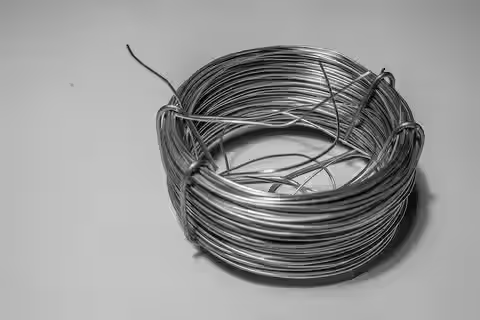
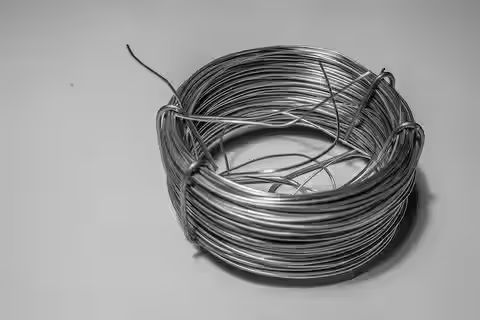
Stainless steel wire rope is built using a hierarchical structure that enhances both strength and flexibility.
How It Is Constructed
- Wires: Thin steel filaments form the smallest unit
- Strands: Multiple wires twisted together
- Core: Central support that holds strands in place
- Rope: Final assembly of strands wound around the core
How It Works
The rope distributes load across multiple wires and strands, reducing stress on any single component. This design allows it to:
- Bend without breaking
- Absorb shock loads
- Maintain structural integrity under tension
The core can be made from steel or fiber, depending on the application. Steel cores offer higher strength, while fiber cores provide more flexibility.
Importance and Real-World Applications
Stainless steel wire rope is essential in industries where safety, durability, and resistance to harsh environments are required.
Key Applications
- Construction: Lifting heavy materials and supporting structures
- Marine Industry: Rigging, anchoring, and mooring systems
- Transportation: Elevators, cable cars, and suspension bridges
- Oil and Gas: Drilling operations and offshore platforms
- Manufacturing: Conveyor systems and mechanical assemblies
Problems It Solves
- Prevents structural failure under heavy loads
- Resists corrosion in humid or salty environments
- Provides flexibility without compromising strength
- Ensures long-term reliability in critical systems
Key Features and Benefits
Core Advantages
- High tensile strength for heavy-duty applications
- Excellent corrosion resistance, especially in marine settings
- Long service life with minimal degradation
- Flexibility for complex mechanical movements
- Resistance to extreme temperatures
Performance Characteristics
- Load-bearing capacity varies by construction type
- Fatigue resistance supports repeated use
- Smooth surface reduces wear on pulleys and sheaves
Types of Stainless Steel Wire Rope
Different types are designed to meet specific operational requirements.
Common Types
-
7x7 Construction
- Moderate flexibility
- Suitable for general-purpose use
-
7x19 Construction
- High flexibility
- Ideal for applications requiring frequent bending
-
1x19 Construction
- High rigidity
- Used in structural and architectural applications
-
Compacted Strand Rope
- Higher strength due to reduced gaps
- Improved wear resistance
-
Plastic-Coated Rope
- protection against abrasion and chemicals
- Used in outdoor or exposed environments
Comparison Table of Wire Rope Types
| Type | Flexibility | Strength | Common Use Cases |
|---|---|---|---|
| 7x7 | Medium | Medium | General lifting, rigging |
| 7x19 | High | Medium | Marine, pulleys, winches |
| 1x19 | Low | High | Structural support |
| Compacted | Medium | High | Heavy-duty industrial use |
| Plastic-Coated | Medium | Medium | Outdoor and corrosive areas |
Materials and Grades
Stainless steel wire rope is typically made from specific grades that determine its performance.
Common Grades
-
Grade 304
- General-purpose corrosion resistance
- Suitable for indoor and mild environments
-
Grade 316
- Enhanced resistance to saltwater and chemicals
- Preferred for marine and industrial use
Material Properties
- High strength under tension
- Stability in extreme temperatures
Recent Trends and Developments (2025–2026)
The wire rope industry has seen several advancements in the past year, driven by demand for efficiency and sustainability.
Key Trends
-
Smart Monitoring Systems (2025)
Sensors integrated into ropes to track wear, tension, and fatigue in real time -
Advanced Coatings (2025–2026)
Nano-coatings improve corrosion resistance and reduce maintenance needs -
Eco-Friendly Manufacturing (2026)
Reduced carbon emissions in steel production processes -
High-Performance Alloys (2025)
Development of stronger, lighter stainless steel blends -
Automation Integration (2026)
Use in robotic systems and automated industrial equipment
These developments enhance safety, extend lifespan, and improve operational efficiency.
Regulations and Safety Standards
Stainless steel wire rope must comply with international safety and quality standards.
Key Standards
-
ISO 2408
Specifies requirements for wire rope construction and performance -
ASTM A1023
Covers material and testing standards -
EN 12385
European standard for steel wire ropes
Safety Guidelines
- Regular inspection for wear and corrosion
- Proper load limits to avoid overloading
- Correct installation and handling
- Routine maintenance and lubrication
Compliance ensures reliability and reduces risk in critical operations.
Tools and Learning Resources
Professionals and learners can access various tools and platforms to understand wire rope technology.
Useful Tools
- Load calculation software for determining safe working loads
- Inspection tools for detecting internal damage
- Rope selection guides based on application needs
Learning Platforms
- Engineering education websites
- Industrial training modules
- Technical documentation and manuals
These resources help improve knowledge and ensure proper usage.
Maintenance and Best Practices
Proper care extends the lifespan and performance of stainless steel wire rope.
Maintenance Tips
- inspection for broken wires or deformation
- Cleaning to remove dirt and corrosive substances
- Lubrication to reduce friction and wear
- Proper storage in dry, ventilated areas
Handling Guidelines
- Avoid sharp bends or kinks
- Use appropriate sheaves and pulleys
- Follow manufacturer recommendations
FAQs
What makes stainless steel wire rope different from regular steel rope?
Stainless steel wire rope offers superior corrosion resistance and durability, making it suitable for harsh environments like marine and chemical industries.
How do I choose the right type of wire rope?
Selection depends on flexibility, strength requirements, and environmental conditions. For example, 7x19 is ideal for flexibility, while 1x19 is used for rigidity.
Can stainless steel wire rope rust?
It is highly resistant to rust, but prolonged exposure to extreme conditions without maintenance may cause minor corrosion.
How often should wire rope be inspected?
Inspection frequency depends on usage, but regular checks are recommended, especially in high-load or safety-critical applications.
What industries rely most on wire rope?
Construction, marine, transportation, and oil and gas industries heavily depend on wire rope for lifting and structural support.
Conclusion
Stainless steel wire rope is a critical component in modern engineering and industrial systems. Its combination of strength, flexibility, and corrosion resistance makes it indispensable across multiple sectors. Understanding its structure, types, and applications helps ensure safe and efficient use.
Recent advancements, including smart monitoring and improved materials, are shaping the future of wire rope technology. By following proper standards and maintenance practices, industries can maximize performance and longevity while maintaining safety.