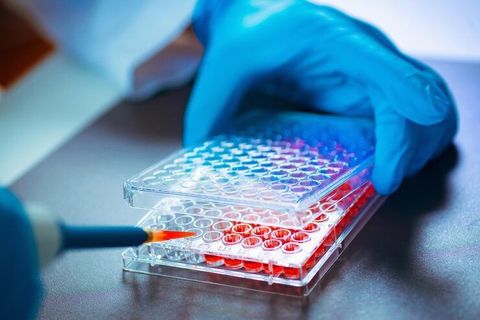
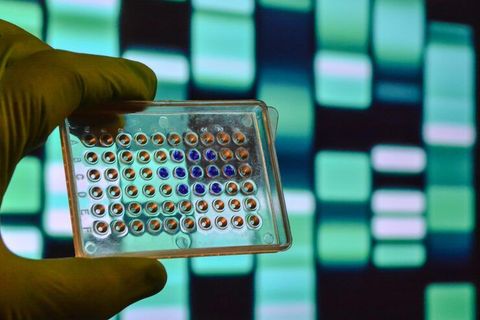
The purpose of assay development is to ensure accurate, reliable, and reproducible results. Whether detecting proteins, nucleic acids, enzymes, or small molecules, a well-developed assay provides the foundation for research, clinical testing, and industrial applications.
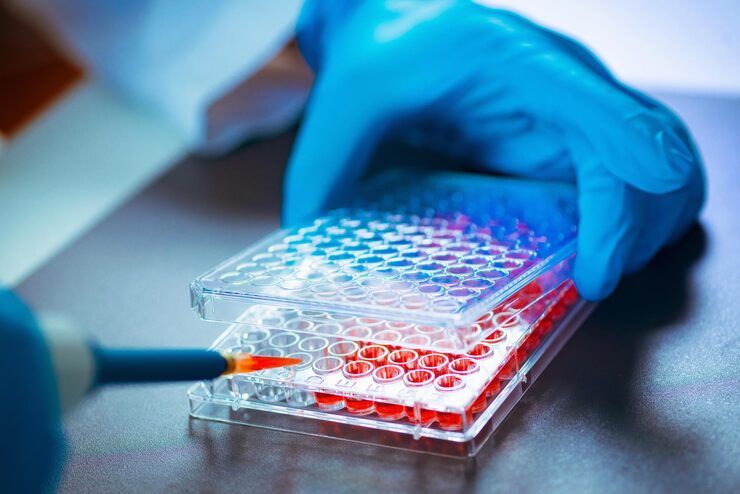
How Assay Development Works
Assay development follows a structured workflow that transforms a scientific question into a measurable output. The process typically includes defining the objective, selecting appropriate detection techniques, optimizing conditions, and validating performance.
At its core, an assay relies on a measurable signal such as fluorescence, absorbance, luminescence, or radioactivity that correlates with the analyte of interest.
The general workflow includes:
- Defining the target (e.g., protein, DNA, metabolite)
- Choosing assay format (qualitative or quantitative)
- Selecting detection method
- Optimizing reagents and conditions
- Validating performance metrics
- Ensuring reproducibility across experiments
Key Components of Assay Development
Reagents and Materials
- Antibodies, enzymes, substrates, buffers
- Standards and controls for calibration
- Optical systems (fluorescence, absorbance)
- Electrochemical sensors
- Mass spectrometry-based detection
Instrumentation
- Plate readers
- PCR machines
- Chromatography systems
- Software tools for signal interpretation
- Statistical validation methods
Types of Assays
Biochemical Assays
- Measure enzyme activity or chemical reactions
- Used in drug discovery and metabolic studies
Immunoassays
- Detect proteins using antigen-antibody interactions
- Examples: ELISA, Western blot
- Analyze DNA or RNA sequences
- Examples: PCR, qPCR, next-generation sequencing
Cell-Based Assays
- Measure cellular responses such as viability, toxicity, or signaling
- Common in pharmacology and toxicology
- Designed for testing large numbers of samples rapidly
- Used in drug discovery pipelines
Importance of Assay Development
Assay development plays a critical role in ensuring scientific accuracy and regulatory compliance. It supports:
- Drug discovery and development
- Clinical diagnostics and disease detection
- Quality control in manufacturing
- Environmental monitoring
- Food safety testing
Without reliable assays, data integrity and decision-making processes would be compromised.
Real-World Use Cases
Assay development is widely applied across industries:
- Pharmaceutical research: Identifying drug candidates and evaluating efficacy
- Clinical laboratories: Detecting diseases such as infections or cancer biomarkers
- Biotechnology: Studying gene expression and protein interactions
- Environmental science: Monitoring pollutants and contaminants
- Agriculture: Testing soil nutrients and pesticide residues
Problems Assay Development Solves
- Inconsistent experimental results
- Low sensitivity or specificity
- Poor reproducibility
- High variability in data
- Inadequate detection limits
By optimizing assay conditions and validation parameters, these challenges can be minimized.
Assay Validation Parameters
| Parameter | Description |
|---|---|
| Accuracy | Closeness of results to true value |
| Precision | Repeatability of results |
| Sensitivity | Ability to detect low concentrations |
| Specificity | Ability to detect target without interference |
| Linearity | Consistency across concentration ranges |
| Robustness | Stability under varying conditions |
Key Features of a Good Assay
Reliability
- Consistent results across multiple runs
- Detects even low levels of analytes
Specificity
- Minimizes false positives or negatives
- Suitable for small-scale and large-scale testing
- Produces similar results across laboratories
Recent Trends and Developments (2025–2026)
Assay development continues to evolve with technological advancements:
- AI-driven assay design (2025): Machine learning models are being used to predict optimal assay conditions and reduce development time
- Microfluidic assays (2025): Lab-on-a-chip technologies enable faster and more efficient testing with minimal sample volumes
- CRISPR-based diagnostics (2025–2026): Highly sensitive molecular assays for rapid pathogen detection
- Multiplex assays (2026): Simultaneous detection of multiple biomarkers in a single test
- Automation and robotics (2025): Increasing use of automated platforms for high-throughput screening
These innovations improve accuracy, reduce time, and enhance scalability.
Regulations and Compliance
Assay development must adhere to strict regulatory standards, especially in healthcare and pharmaceuticals.
Key Guidelines
- Good Laboratory Practice (GLP)
- Good Manufacturing Practice (GMP)
- International Council for Harmonisation (ICH) guidelines
- ISO standards for laboratory testing
Compliance Requirements
- Documentation of assay procedures
- Validation reports
- Quality control measures
- Data integrity and traceability
Regulatory compliance ensures that assays are reliable and suitable for their intended use.
Tools and Platforms for Assay Development
Laboratory Instruments
- Microplate readers
- PCR and qPCR systems
- Flow cytometers
- Chromatography systems
Software Tools
- Data analysis platforms
- Statistical modeling tools
- Laboratory Information Management Systems (LIMS)
Learning Resources
- Online biotechnology courses
- Scientific journals and publications
- Research databases and open-access repositories
Advantages of Effective Assay Development
Improved Accuracy
- Reduces errors in measurement
- Enables quicker research and diagnostic outcomes
Efficiency
- Minimizes repeated experiments
- Supports discovery of new therapies and technologies
Challenges in Assay Development
Technical Complexity
- Requires expertise in multiple disciplines
- Biological samples can introduce inconsistencies
Optimization Time
- Developing robust assays can be time-consuming
- Strict validation requirements must be met
FAQs
What is assay development used for?
Assay development is used to create methods for detecting and measuring biological or chemical substances in research, diagnostics, and industrial applications.
What is the difference between assay development and validation?
Development focuses on designing and optimizing the assay, while validation ensures it meets performance and regulatory standards.
Why is sensitivity important in an assay?
Sensitivity determines the assay’s ability to detect low concentrations of a target, which is critical for early detection and accurate analysis.
What industries rely on assay development?
Pharmaceuticals, biotechnology, healthcare diagnostics, environmental testing, and food safety industries all depend on assay development.
How long does assay development take?
The timeline varies depending on complexity, ranging from a few weeks to several months for highly specialized assays.
Conclusion
Assay development is a foundational process in modern science and industry. It enables accurate measurement, supports innovation, and ensures reliable data across a wide range of applications. From drug discovery to environmental monitoring, well-designed assays provide the tools needed to solve complex problems and advance knowledge.
As technologies such as artificial intelligence, automation, and molecular diagnostics continue to evolve, assay development is becoming faster, more precise, and increasingly scalable. Understanding its principles, components, and challenges is essential for anyone working in scientific research or analytical fields.
Disclaimer: The information provided in this article is for informational purposes only. We do not make any claims or guarantees regarding the accuracy, reliability, or completeness of the information presented. The content is not intended as professional advice and should not be relied upon as such. Readers are encouraged to conduct their own research and consult with appropriate professionals before making any decisions based on the information provided in this article.